
 Tiếng Việt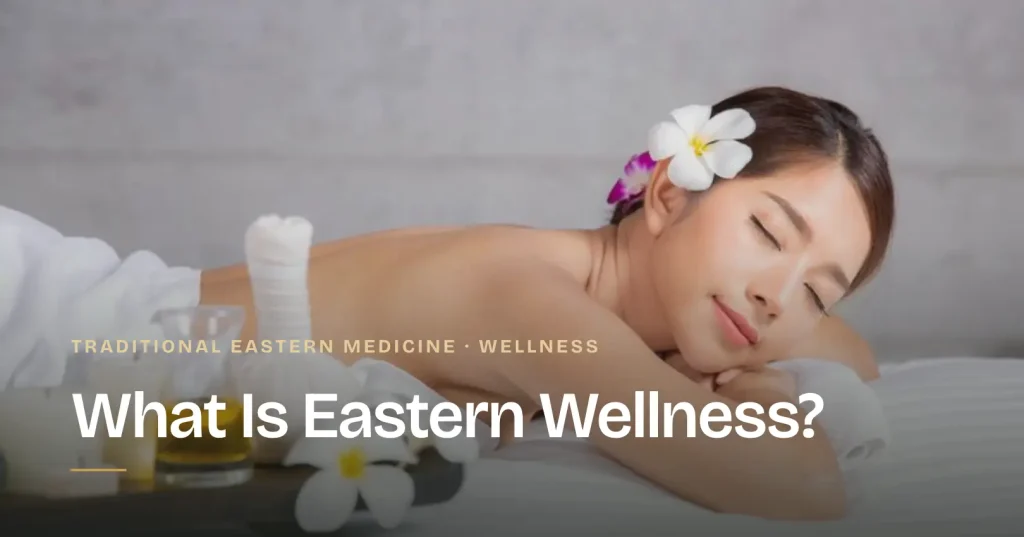
Eastern wellness is a comprehensive system of health care and preservation rooted in traditional Eastern medicine, encompassing the harmonization of qi and blood, the balance of yin and yang, and the nurturing of vital energy in alignment with the body’s and environment’s natural rhythms.
Unlike medical treatment, Eastern wellness focuses on prevention: keeping the body from falling into imbalance rather than only responding when symptoms have already appeared.
This article explains the foundations of Eastern wellness, the most common methods, the distinction between wellness therapy and therapeutic wellness, and how to apply this approach meaningfully in modern daily life.
Key Takeaways
- Eastern wellness is not medical treatment. It is an active practice for maintaining health by nurturing vital energy, harmonizing qi and blood, and living in alignment with natural rhythms.
- The three foundational pillars are: yin-yang balance, the free flow of qi and blood through the meridian system, and five-element seasonal practice. These three elements are deeply interconnected.
- Eastern wellness therapy applies traditional techniques such as acupressure, meridian bodywork, and heat therapy to support relaxation and recovery in a specific area of the body. It is not medical intervention.
- Eastern wellness therapy at a wellness spa is well-suited for people carrying accumulated stress, mild fatigue, or slight physical imbalance. It does not replace medical evaluation when clear symptoms are present.
- Combining daily self-practice at home such as qi gong and seasonal eating with regular spa sessions produces more sustained results than either approach alone.
What Is Eastern Wellness?
Eastern wellness is the collective term for health care practices from traditional Eastern medicine, including Chinese medicine, Vietnamese traditional medicine (Nam Y), Korean traditional medicine, and Japanese traditional medicine. Its goal is to maintain the body’s internal balance rather than addressing symptoms only after illness has already developed.
According to a 2024 global survey by the World Health Organization (WHO), two thirds of member states reported that at least 40% of their population uses at least one form of traditional, complementary, or integrative medicine, with higher figures in Africa and Southeast Asia.
In Vietnam specifically, traditional medicine, known as Nam Y, has a clearly established indigenous foundation dating to the 14th century. The monk Tue Tinh (1330-1400) laid the groundwork through the principle of using locally available medicinal plants to care for the Vietnamese people. Hai Thuong Lan Ong continued and systematized this tradition in the 18th century, producing the Hai Thuong Y Tong Tam Linh, a foundational text of Vietnamese traditional medicine that is still referenced today.
The core distinction between Eastern wellness and modern medicine lies in how health itself is defined. Eastern medicine views health as a state of dynamic balance, not simply the absence of disease. When the body is properly nourished and balance is maintained, illness has fewer conditions in which to develop.
The Three Pillars of Eastern Wellness
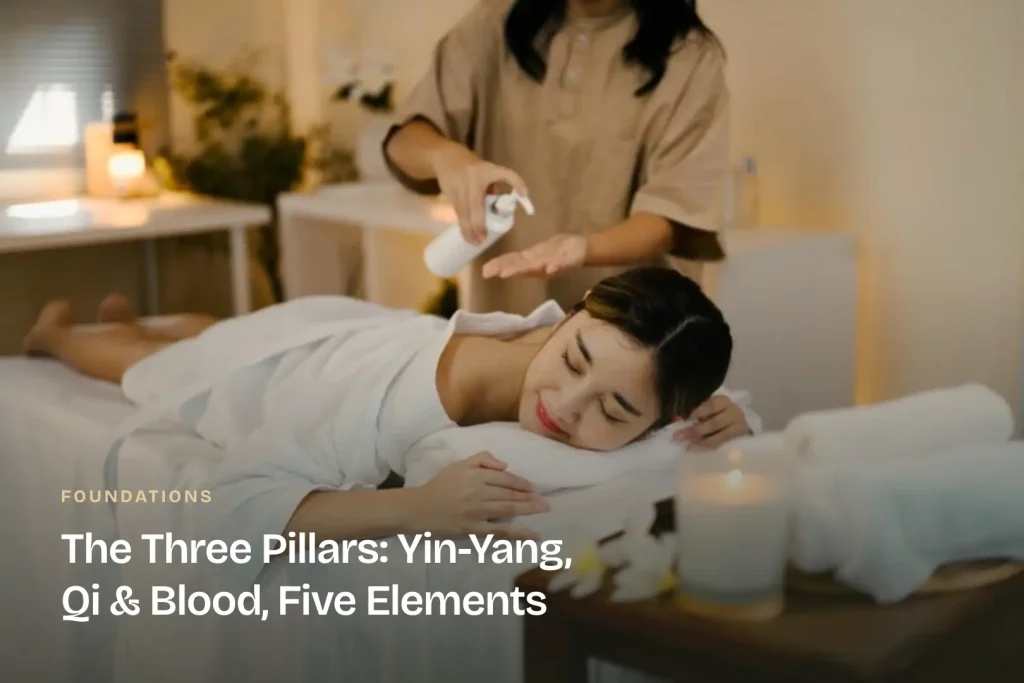
The entire system of Eastern wellness is built on three foundational principles that are closely interconnected. Understanding these clearly allows practitioners to see the whole picture of body care rather than applying isolated techniques without context.
Yin-Yang Balance
Yin and yang are complementary opposites that cannot be separated: cold and heat, stillness and movement, rest and activity, inward and outward.
In Eastern wellness, health is not a fixed state at either pole. It is a flexible movement between the two according to circumstances and timing.
A person who works continuously without rest (excess yang) or who sits in one position for too long without movement (excess yin, stagnation) is in a state of imbalance that calls for adjustment.
Free Flow of Qi and Blood Through the Meridian System
Qi is the vital energy that flows throughout the body via the meridian system, a network of channels connecting internal organs to the body’s surface. Blood carries nutrients and oxygen to every cell.
When qi and blood flow smoothly, the body feels evenly warm, alive, and capable of recovering quickly from fatigue.
When qi becomes blocked due to muscle tension, prolonged stress, or exposure to cold, people typically feel heavy, notice localized aches, and experience unexplained fatigue.
Five Elements and Seasonal Living
The five elements, Metal, Wood, Water, Fire, and Earth, form a classification framework connecting internal organs, seasons, food flavors, and emotions into interrelated groups.
The liver corresponds to Wood and spring; the kidneys correspond to Water and winter. In Eastern wellness, eating habits, rest patterns, and body care are adjusted according to each season rather than applied through a single rigid formula year-round. This is why an effective Eastern wellness practice often looks different at different times of the year, even for the same person.
Common Eastern Wellness Methods
Eastern wellness is not a single technique but a collection of practices that can be combined flexibly based on individual needs, physical condition, and practical circumstances. The following are the most widely practiced methods, from daily self-practice at home to specialized sessions that benefit from a trained therapist.
Massage and Acupressure
Massage in Eastern medicine differs from standard relaxation massage in that the strokes follow the direction of meridian flow and apply intentional pressure to acupoints, concentrated energy points along the meridian channels.
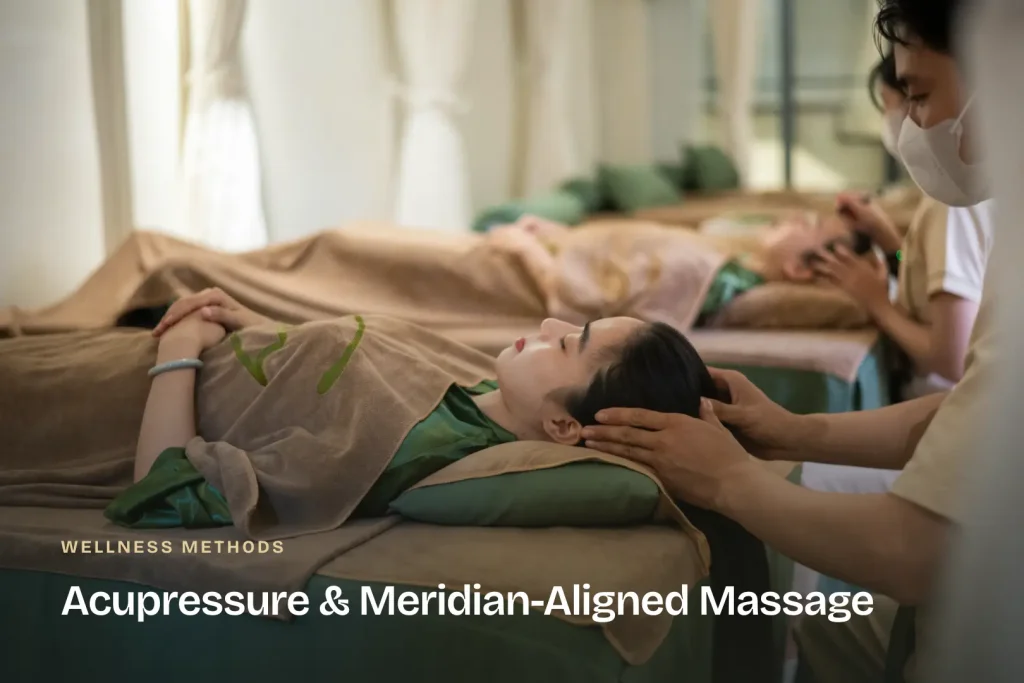
WHO recognizes over 360 primary acupoints in the traditional meridian system, distributed along 14 main meridian channels throughout the body. Acupressure applied with correct technique typically produces a mild sensation of pressure or gentle aching at the point being stimulated, a normal response indicating that the acupoint is being activated, which fades within seconds as the therapist adjusts.
Qi Gong and Wellness Movement
Qi gong is a system of exercises combining controlled breathwork, slow deliberate movement, and focused mental attention. It is designed to cultivate and redistribute qi within the body rather than deplete energy the way high-intensity exercise does.
A review published in the Journal of Alternative and Complementary Medicine (2015), synthesizing 36 clinical trials, found that tai chi improved balance, reduced stress, and enhanced sleep quality in middle-aged and older adults. The Eight Brocades and the Muscle-Tendon Change Classic are two other qi gong forms widely practiced across age groups, requiring no equipment and suitable for daily home practice.
Heat-Based Eastern Wellness: Moxibustion and Heat Therapy
Heat therapy in Eastern medicine is grounded in the principle that warmth helps the meridians open, qi flows more freely, and areas of the body affected by cold or blockage are supported in recovering.
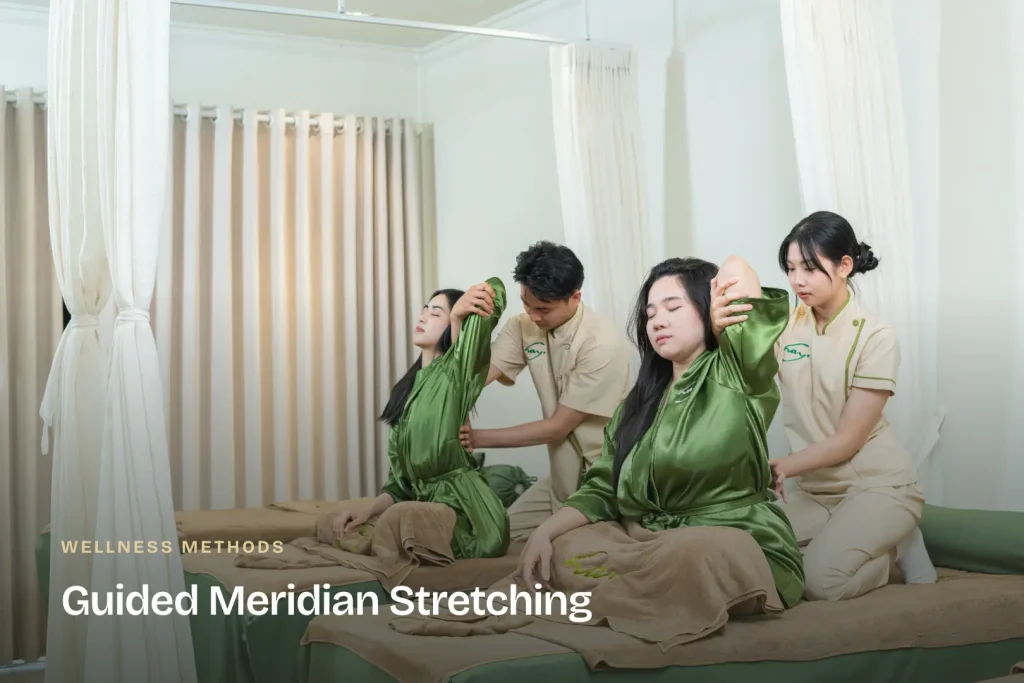
Moxibustion, the burning of dried moxa (mugwort) on or near acupoints, is the oldest heat therapy technique in Eastern medicine and is recognized by WHO as a traditional medicine practice with a broad evidence base.
In a modern wellness spa setting, heat therapy is typically delivered through hot stones, warm herbal pouches, or heated towels placed along major meridian pathways. This approach is safer and easier to personalize according to each guest’s skin sensitivity and heat tolerance.
Seasonal Dietary Wellness
Eastern medicine classifies food by its thermal nature and flavor: warming foods such as ginger, cinnamon, spring onion, and garlic support yang energy and warm the body; cooling foods such as pennywort, mung beans, winter melon, and bitter melon clear heat and support detoxification.
Dietary wellness in this tradition is not about restriction. It is about adjusting the proportion and timing of food intake to match the body’s state and the current season: eat warming foods in cold seasons, cooling foods in warm seasons, and eat early enough to allow digestion to complete before sleep.
This is the most accessible form of Eastern wellness practice because it requires no technique or equipment, only a gradual adjustment of daily eating habits aligned with natural rhythms.
What Is Eastern Wellness Therapy and How Does It Differ From Everyday Wellness Practice?
Eastern wellness therapy is the intentional application of Eastern wellness techniques, such as acupressure, meridian bodywork, and heat therapy, to support relaxation and recovery in a specific area of the body that is carrying tension or mild imbalance.
Everyday Eastern wellness practice, such as qi gong, seasonal eating, and regulating sleep schedules, is a form of self-maintenance that requires no therapist and is applied consistently day by day.
Eastern wellness therapy, by contrast, is a focused care session with a clearer objective: easing tension in the neck and shoulders, supporting circulation in the lower back, or warming the abdominal area. It is carried out by a trained therapist.
The important boundary to understand: Eastern wellness therapy at a spa is wellness care, not medical treatment. Spa therapists are trained in practical technique and body awareness, not in diagnosing or managing medical conditions. When symptoms are noticeable, persistent, or potentially related to a health condition, the first step is always a medical evaluation, not a spa booking.
Eastern Wellness Therapy at a Spa: What to Expect
Eastern wellness therapy at a wellness spa offers a different experience from standard relaxation massage, but it is also different from medical treatment. Understanding the scope clearly helps guests set the right expectations and choose a service that genuinely matches their need.
The table below compares three approaches so readers can position each one before making a decision.
| Dimension | Standard Relaxation Massage | Eastern Wellness Therapy (Spa) | Medical Treatment |
| Goal | Muscle relaxation, immediate stress relief | Relaxation and support for qi and blood flow through the meridians | Diagnosing and treating illness |
| Technique | Muscle-focused bodywork by area | Acupressure, meridian-aligned massage, heat therapy | Medication, clinical intervention, surgery |
| Best suited when | Ordinary fatigue, need to unwind | Accumulated stress, mild imbalance, interest in Eastern body care | Clear symptoms, conditions requiring diagnosis |
| Limitations | Does not work along the meridian system | Does not diagnose or treat medical conditions | Less emphasis on prevention and holistic felt experience |
At HAY Wellness Center, sessions are built around Vietnamese-style Eastern wellness, combining acupressure technique, meridian-aligned massage, and heat therapy.
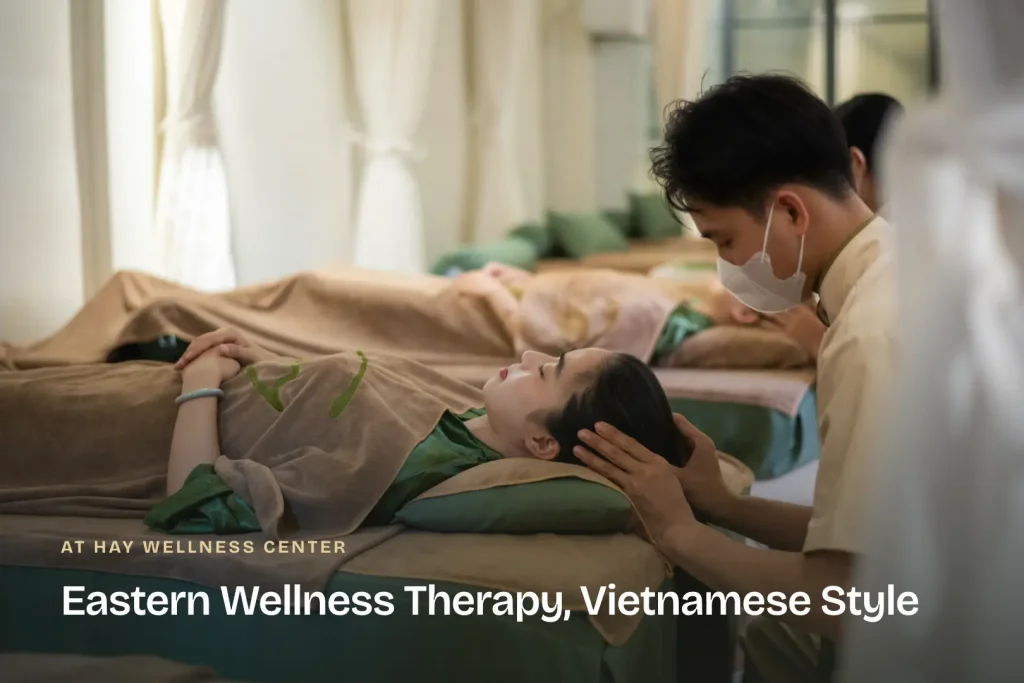
The shoulder, neck, and back wellness session includes acupoint work along the neck and shoulder area, meridian-aligned massage strokes, and hot stone application for deeper muscle relaxation, all oriented toward easing the feeling of tension and restoring a sense of lightness after the session.
The scalp wellness treatment applies acupoint stimulation across the head, temples, and neck and shoulder area during scalp care, producing a clearer head, less shoulder weight, and a calmer state of mind after the session.
Who Is a Good Fit and Who Should Proceed With Caution?
Eastern wellness is appropriate for most healthy adults, but certain groups should consult a medical professional before engaging in techniques with physical impact such as acupressure or heat therapy.

Well-Suited Groups
Office workers who spend long hours at a desk, frequently carry neck and shoulder tension, experience back fatigue, and have disrupted sleep are the group that benefits most clearly from regular Eastern wellness therapy.
People in a recovery phase after prolonged fatigue, not after surgery or acute illness, are also well-suited for gentler Eastern wellness practices such as qi gong and seasonal dietary adjustment.
Older adults who want to maintain physical vitality and flexibility can practice qi gong consistently, follow seasonal dietary guidance, and receive adapted nurturing massage sessions suited to their physical condition.
Groups That Should Proceed With Caution
Anyone with open wounds, acute inflammation, fever, or a recent surgical procedure should not undergo acupressure or heat therapy without medical clearance.
Pregnant women should avoid specific acupoints that may stimulate uterine contractions and should discuss any planned practice with both their obstetrician and the therapist beforehand.
People with cardiovascular conditions, unstable blood pressure, or those taking blood thinners should confirm with their doctor before any technique involving direct physical application.
Frequently Asked Questions About Eastern Wellness
What Is the Difference Between Eastern Wellness and Eastern Wellness Therapy?
Eastern wellness is the broader concept encompassing all health care practices from traditional Eastern medicine. Eastern wellness therapy is the application of those techniques in a specific, goal-oriented care session. Seasonal eating and practicing qi gong are everyday Eastern wellness self-practice. A session of acupressure and meridian massage at a spa to ease neck and shoulder tension is Eastern wellness therapy, carried out with the support of a trained therapist.
Can Eastern Wellness Therapy Replace a Medical Consultation?
No. Eastern wellness therapy at a spa is wellness care, not a substitute for medical evaluation. When clear symptoms are present such as persistent pain, numbness, muscle weakness, fever, or unexplained physical changes, the first step is always seeing a doctor to identify the correct cause. Eastern wellness therapy works best when used alongside healthy lifestyle habits and regular medical check-ups, not as a first response when something is clearly wrong.
Does Acupressure Hurt?
Acupressure applied with correct technique typically produces a mild sensation of pressure or gentle aching at the point being stimulated, not sharp pain or lasting discomfort. This response is normal and indicates that the acupoint is being activated. It usually fades within seconds as the therapist adjusts their pressure. If you experience clear pain or discomfort, notify the therapist immediately so they can adjust or stop. There is no need to push through.
Do Healthy People Need Eastern Wellness?
Eastern wellness is best suited for people who are currently healthy and want to maintain that state over time. This is the core philosophy of prevention in Eastern medicine. Practicing Eastern wellness before the body has lost its balance is far easier and more effective than trying to recover after exhaustion has already set in. Even simple habits such as a morning walk, eating at consistent times, and sleeping before 11 pm already qualify as foundational Eastern wellness practice.
Is It Better to Practice at Home or Visit a Spa Regularly?
Combining both produces more sustained results than either approach alone. Daily self-practice at home, through qi gong, seasonal dietary habits, and consistent sleep schedules, maintains a baseline of balance day to day. Regular Eastern wellness therapy sessions at a spa work more deeply into the meridians and acupoints than self-practice can reach on its own, and are particularly effective when the body has accumulated significant tension or needs to recover more quickly after a demanding period.
Conclusion
Eastern wellness is a comprehensive system of health care with genuine depth, not a single service or isolated technique. From yin-yang balance and the flow of qi and blood through the meridians to seasonal living and targeted wellness therapy, the entire system is oriented toward one continuous goal: nurturing vitality from within and maintaining balance before imbalance occurs.
If you want to experience Eastern wellness therapy in a Vietnamese style, through meridian acupressure, nurturing massage, and heat therapy, HAY Wellness Center is a space to begin. Each session is adjusted to the guest’s actual physical state rather than applying a fixed protocol to everyone. That is precisely in the spirit of Eastern wellness: listen to the body first, then care for it.
Reference Sources
Chen, W., Li, M., Li, H., Lin, Y., & Feng, Z. (2023). Tai Chi for fall prevention and balance improvement in older adults: a systematic review and meta-analysis of randomized controlled trials. Frontiers in Public Health, 11, 1236050. https://doi.org/10.3389/fpubh.2023.1236050
National Center for Complementary and Integrative Health. (2019, May). Massage therapy: What you need to know. U.S. Department of Health & Human Services. https://www.nccih.nih.gov/health/massage-therapy-what-you-need-to-know
UNESCO. (2010). Acupuncture and moxibustion of traditional Chinese medicine. Intangible Cultural Heritage. https://ich.unesco.org/en/RL/acupuncture-and-moxibustion-of-traditional-chinese-medicine-00425
World Health Organization. (1991). A proposed standard international acupuncture nomenclature: Report of a WHO scientific group. WHO. https://www.who.int/publications/i/item/9290611057
World Health Organization. (2024). WHO global report on traditional, complementary and integrative medicine 2024. WHO. https://iris.who.int/handle/10665/376623
